Skip to content

Category: Community Engagement

Charter Day Ancestral Remembrance Tribute: Honoring the Enslaved at William & Mary

By Omiyẹmi (Artisia) Green, Professor of Theatre and Africana Studies, University Professor of Teaching Excellence, Provost Faculty Fellow

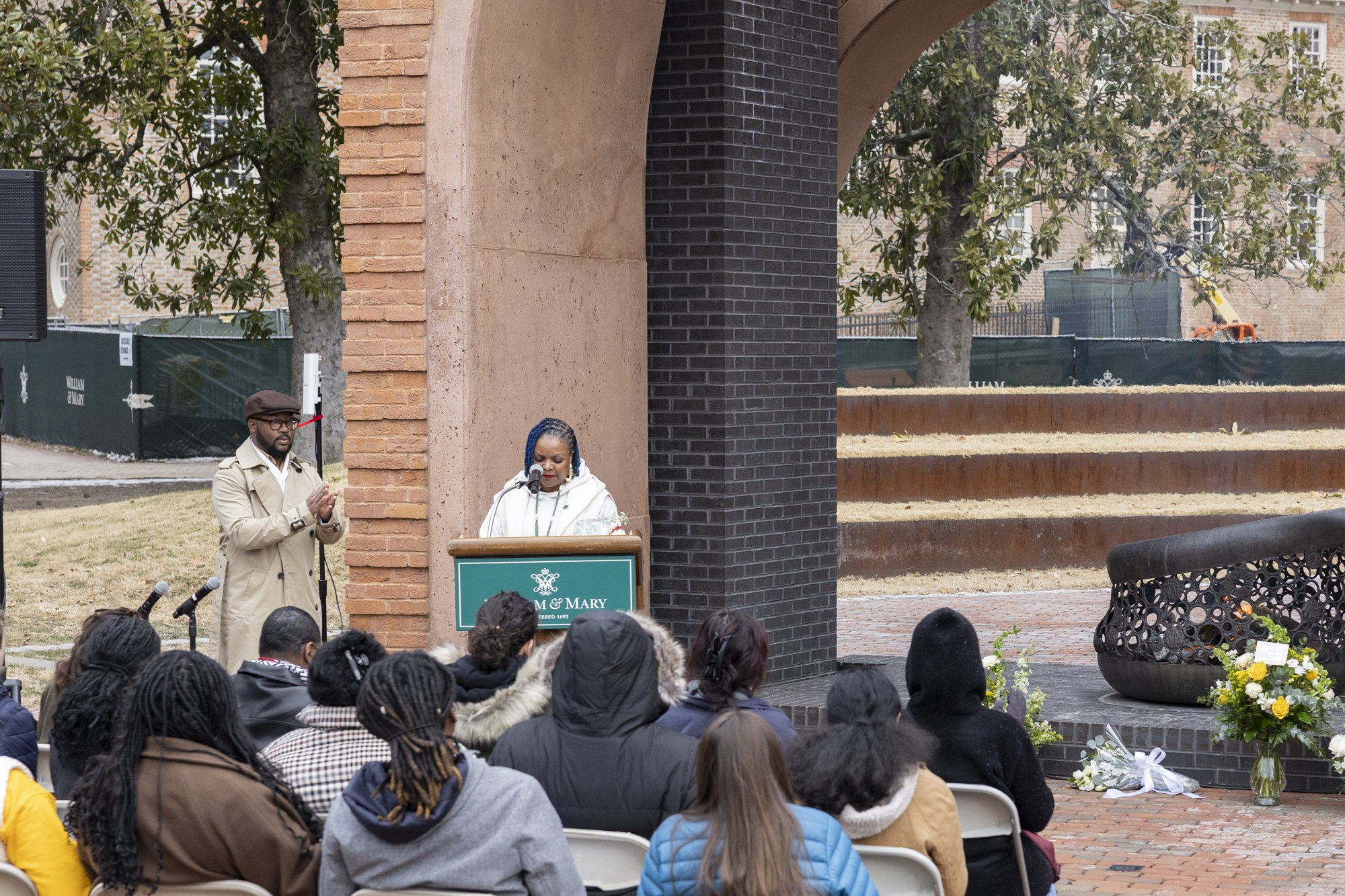
On W&M’s 333rd Charter Day, to say that my heart swelled as I watched community members make their way to the Hearth: Memorial to the Enslaved would be an understatement. Still, it is the closest language I have for the immense pride and quiet fulfillment I felt witnessing people arrive bundled and layered against the cold (I had on three layers myself), carrying flowers, instruments, and hearts full of tribute for those enslaved by the Alma Mater of the Nation.

Over the past academic year, I have been intentionally building an archival box of my work and achievements at William & Mary, which I plan to submit to Special Collections upon the completion of my tenure. This impulse emerged while editing my Tack Lecture on “A History of African American Theatre and Black Theater at William & Mary Theatre.” Having spent so much time in Swem Library tracking documents and conducting oral history interviews, I became acutely aware of how the presence and absence of material shapes institutional records and future perspectives. People will remember, say, and write what they will. I wanted, however, to exercise a measure of agency over my own record. Thus, my archival box will stand as my voice.

It is in that spirit that I offer this reflection.

The Humble Beginnings (2024)

What is now the “Charter Day Ancestral Remembrance Tribute” began humbly and sacredly in 2024, on February 9th at 6 a.m., with just me and my Ibeji, Iya Ifasola Osunponmile, offering libation and prayers. The ceremony was born from my own pain and from a growing awareness of what felt like a concerted period of pressure on Black women in higher education. We were resigning due to bullying, becoming ill or dying under the weight of stress, navigating toxic work environments and racial weathering, and, in some cases, confronting stories of self-harm.

My Ibeji, another Black woman not in the academy but deeply attuned to my realities, stood with me in what was an intentional intervention, first for myself, and then for others navigating similar conditions across higher education.

It felt right to bring this act of care to a public ancestral altar, and the Hearth offered that possibility. Holding our gathering on Charter Day, while inviting peers at other institutions to gather simultaneously wherever they felt led, resonated deeply. It braided past and present labor into a shared act of remembrance and created space for collective grief, reflection, and guidance.

Why the Hearth on Charter Day Matters

There was another reason gathering at the Hearth on February 6th mattered. As far as I knew, there were no signature Charter Day proceedings at William & Mary that centered on the humanity and contributions of those it once enslaved. I am not referring to the reading of a Land Acknowledgement or the Statement on Slavery and Its Legacies at another event, but to a dedicated and exclusive program. As an alumna and a current member of the faculty, that absence made this intervention all the more necessary.

William & Mary is known for many things, tradition among them. And traditions are not only inherited; they are made. As Alice Walker reminds us, “…we are the ones we’ve been waiting for.” So, with the support of another culture bearer, I began an offering, one that is now entering institutional memory and, over time, I hope, will become part of how the university remembers itself.

Building on a Legacy

I came to this work of remembrance deeply informed by the cultural stewardship of William & Mary faculty, specifically Dr. Joanne M. Braxton. Her scholarship and vision through the Middle Passage Project, along with her leadership on the board of the Middle Passage Ceremonies and Port Markers Project, Inc., demonstrated how remembrance can be both scholarly and sacred, public and personal. The Charter Day Ancestral Remembrance Tribute, which stands on this continuum of care, labor, and ethical attention, is part of a lineage of stewardship in honoring those who came before while creating space for future generations to remember, reflect, and act.
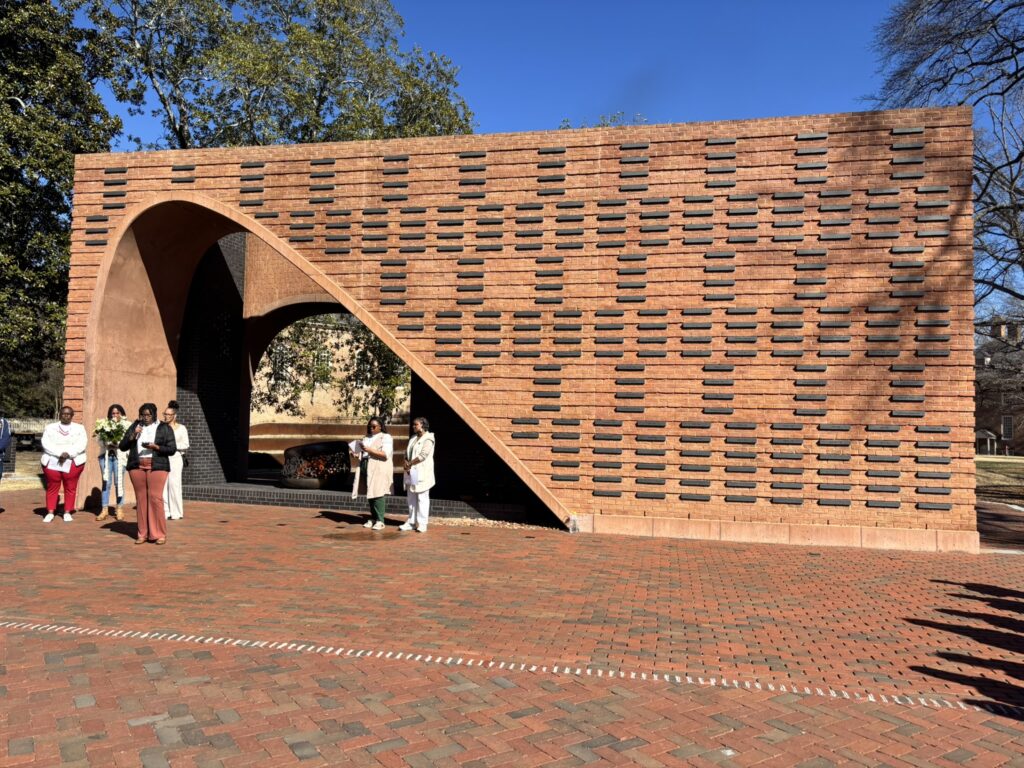
Ancestral Remembrance Tribute, February 2025

Institutional Support and Recognition (2025–2026)

In 2025, leadership within the Forum (formerly the Black Faculty and Staff Forum) helped expand the initiative into a ceremony of collective remembrance and pressed the idea of institutionalizing the tribute at the university level. The executive board believed that situating a collective offering at the Hearth, the university’s most visible and intentional site honoring the lives and labor of the enslaved, ensured that Charter Day celebrations would be grounded in historical truth and ethical reflection.

This year, the Charter Day Ancestral Remembrance Tribute gained further momentum and institutional support through sponsorship from The Lemon Project: A Journey of Reconciliation, under the leadership of Interim Robert Francis Engs Director Dr. Jajuan Johnson and Associate Director Dr. Sarah Thomas, with administrative coordination from Andrea Harris, Senior Associate Director of University Events in University Marketing.
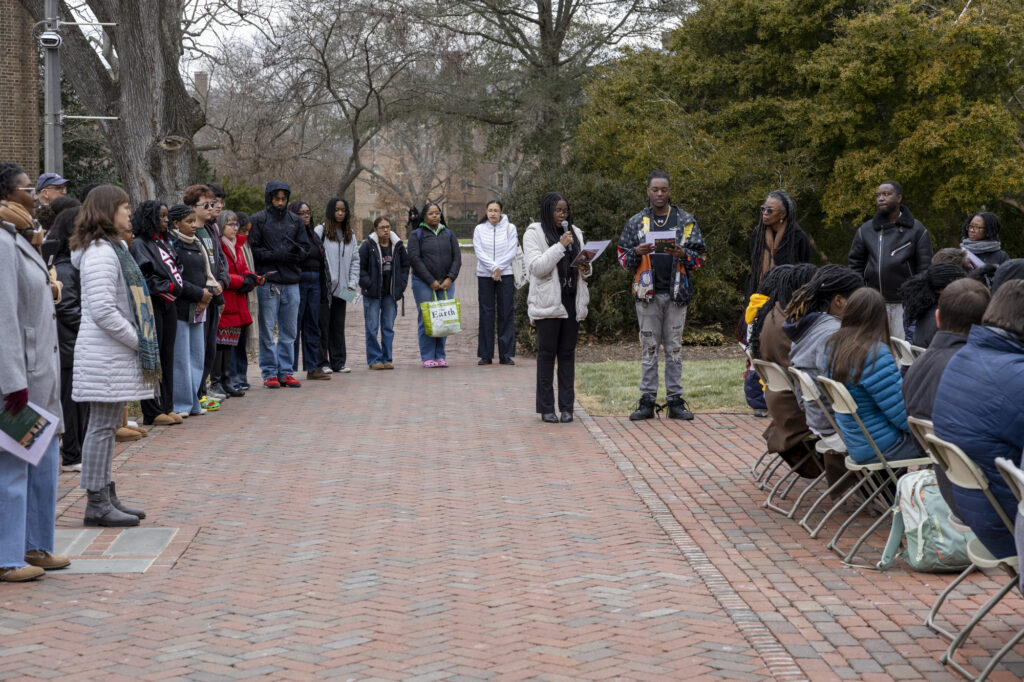
William & Mary community members take part in the 3rd Annual Charter Day Ancestral Remembrance Tribute, February 6, 2026.

Acknowledging Labor and Stewardship

Making visible the labor, seen and unseen, that sustained this ceremony is central to the work. The grounds for this year’s ceremony were made safe through the care of Jeffrey Harris, Mike Fowler, Dennis Doyle, Kareem Harding, Harrison Cherry, Trashawne Swittenberg, and Kyle Jenkins in Grounds & Gardens, who de-iced and salted the area in advance. Kristi Dodson, also in Grounds & Gardens, ensured I could retrieve my ceremonial flowers from my office and return to the Hearth in time for the ceremony to begin. Student employees in Facilities Management tended to the Hearth’s flame with intention.

Around the fire, stories of resistance were shared, including one powerful account from Dr. Hannah Rosen, program director of American Studies. Alumni serving on W&M leadership boards made space in already full Charter Day schedules to attend, and the College of Arts & Sciences Dean, Dr. Suzanne Raitt, also attended. One community member, en route to Murfreesboro, North Carolina, for the unveiling of the highway historical marker honoring Hannah Crafts (the pen name of Hannah Bond, an enslaved woman who escaped and authored The Bondwoman’s Narrative), participated in both the 7 a.m. and 1 p.m. ceremonies before continuing their journey.
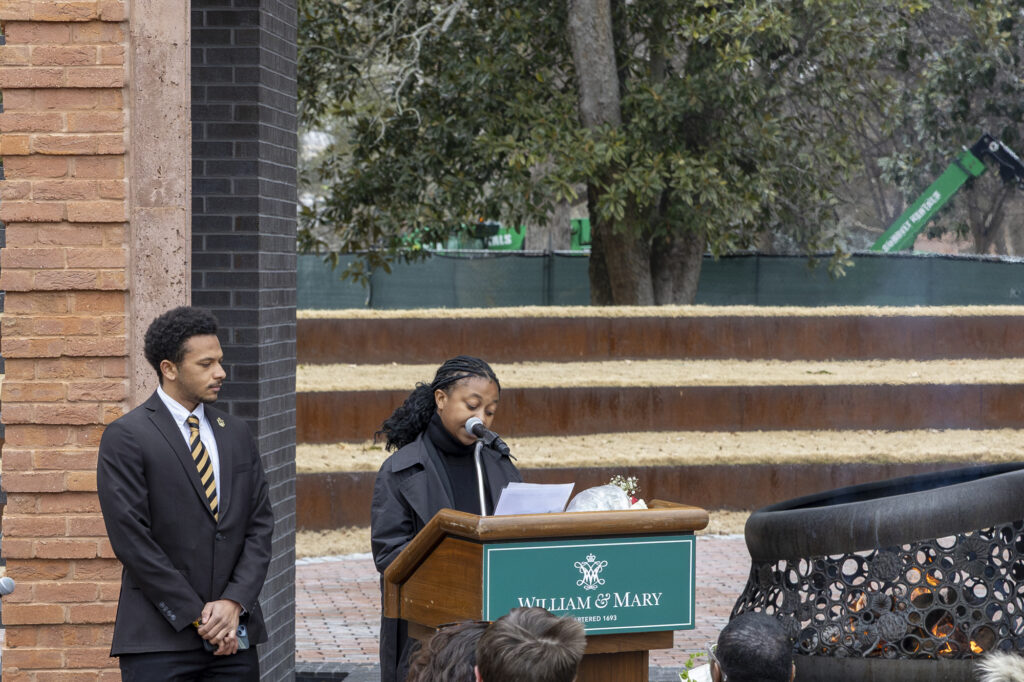
Representatives from student organizations shared reflections at the 3rd Annual Ancestral Remembrance Tribute, February 6, 2026.

With the support of Monique Williams, Ed.S., Director of the Student Center for Inclusive Excellence, and Kristina James, Senior Event & Scheduling Specialist in Student Unions & Engagement, student leaders were involved as stewards of memory and placemaking. They, along with faculty in Theatre & Performance (Dr. Sarah Ashford Hart), English (Professor Hermine Pinson), Music (Professor Victor Haskins), History, and the programs of Africana Studies (Dr. Iyabo Osiapem), American Studies, and Gender, Sexuality & Women’s Studies, secured flowers and/or composed tributes and performances.

In 2025, the following Registered Student Organizations helped shape the ceremony’s early collective form: Alpha Phi Alpha Fraternity, Inc., Kappa Pi Chapter; Kappa Alpha Psi Fraternity, Inc., Xi Theta Chapter; Minorities Against Climate Change; Students of Caribbean Ancestry; Student Assembly’s Committee for the Contextualization of Campus Landmarks & Iconography; and Emerald Elite Stomp n’ Shake. This foundation was carried forward and broadened in 2026, with continued participation from some of those same groups alongside new voices, including the Black Law Student Association, Black Poets Society, Black Student Organization, and the W&M Chapter of the NAACP.
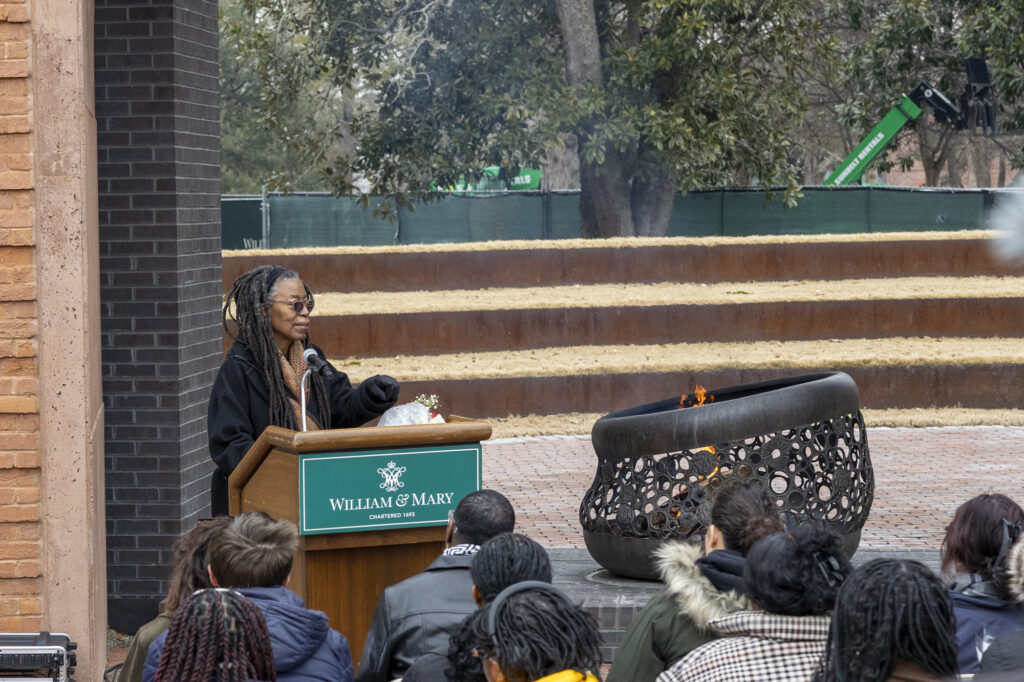
Dr. Hermine Pinson read a poem at the Ancestral Remembrance Tribute, February 6, 2026.

Reflections and Hopes

Together, faculty, staff, students, alumni, and community members—across time—continue to build on the strength, contributions, and resilience of those enslaved by William & Mary, and we commit ourselves to honoring their humanity and legacy in our work. I close with three hopes for the future:

  1. I hope that the Charter Day Ancestral Remembrance Tribute, in its growth and continuity, will stand as a living testament to the importance of labor that is both critical and often forgotten.
  2. I hope that this collective act of cultural stewardship will endure not only as a reflection on the past but also as a signature placemaking event for future generations, “for all time coming.”
  3. And lastly, I hope that it remains an event that reinforces our university’s value of belonging while reinvigorating us for the ongoing relational work ahead.
Comments closed

Call for Proposals for the 16th Annual Lemon Project Spring Symposium

United We Stand: Fortifying Black Communities through Courage, Dignity, and Joy

Proposals by individuals and panels of 3-4 people are welcome.

Call for Proposals

“You don’t need permission to have a revolution.” – Dr. Daniel Black, “What Would the Ancestors Say?” at the 15th Annual Lemon Project Spring Symposium

During his keynote at our 2025 symposium, Dr. Daniel Black made a powerful call to action, urging us to unify and create a more just society for present and future generations. Dr. Black reminded us that “we are the way makers and the dream shakers.” Building and maintaining thriving communities requires the power of our imagination and commitment to collective work and responsibility. We aim to continue these conversations as we focus the theme: “United We Stand: Fortifying Black Communities through Courage, Dignity, and Joy.”

In today’s world, we must find a way to unify and amplify our voices as we face challenges. Dr. Black reminded us that we have everything necessary to continually overcome barriers, and a just future demands that we act with wisdom, courage, dignity, and joy.

The 2026 Spring Symposium will explore the following questions: How can Black people and their communities fortify themselves through cultural practices, powerful history, and collective action? How do Black communities find joy and courage amid constant challenges and dehumanization? In what ways can dignity serve as a survival mechanism for Black communities? How can universities and other institutions who are confronting slavery and its legacies continue to work towards repair and healing despite challenges?

These questions seek to stimulate conversation and explore new ideas at the symposium as we focus on fortifying Black communities through courage, dignity, and joy. We encourage participants to reflect on historical contexts, celebrate cultural strengths, and envision collaborative pathways towards sustainable empowerment and social justice. 

Our symposium is multi-disciplinary and open to all. We seek proposals from people who research Black communities and are interested in themes related to courage, dignity, and joy, including but not limited to academic and descendant and/or family researchers and historians, educators, genealogists, activists, spiritual practitioners, and members of Greater Williamsburg communities and beyond. We invite a broad range of topics from people who work in the fields of American Studies, Black Studies, Anthropology, History, Public Humanities, Preservation, Oral History, STEM, among others. We also invite community organizers, activists, mental health professionals, and wellness practitioners to submit proposals in areas such as cultural production (art, poetry, music), wellness, and spirituality.

Possible topics include but are not limited to:

  • Family histories, local histories, descendant histories, and genealogical studies
  • Black family reunions, gathering spaces, and religious events, including homegoings, and homecomings
  • Black LGBTQ+ people and/or communities’
  • Black healers and ancestral health practices; healing through land, space, and ancestral ties
  • Mental and emotional health of Black communities
  • Black memory, community healing practices, foodways, and heritage studies
  • Reparations and reparative efforts by people and/or institutions
  • Narratives of enslaved and free Black people, focusing on stories of courage, dignity, and joy
  • Finding courage, dignity, and joy in the work of universities studying slavery and its legacies

The symposium has three main objectives, focusing on resilience, collaboration, and repair:

  • Deepen understanding of cultural and historical resilience
    • Participants will explore how Black communities have historically drawn upon cultural practices, ancestral knowledge, and collective memory as a blueprint to educate and mobilize communities to make positive change. 
  • Foster cross-disciplinary and community collaboration
    • Attendees are encouraged to engage with knowledge producers across academic disciplines and community roles to promote dialogue, build networks, and create actionable strategies for community improvement.
  • Inspire Practices of Repair, Wellness, and Empowerment
    • Symposium attendees will gain insight into reparative practices, wellness traditions, and institutional models that support the vitality of communities. 

Read the submission guidelines and submit your proposals by October 10, 2025.

Comments closed

The Lemon Project Hosts 5th Summer Sankofa Genealogical Research Workshop 

By Jajuan Johnson, Ph.D., Interim Robert Francis Engs Director, The Lemon Project

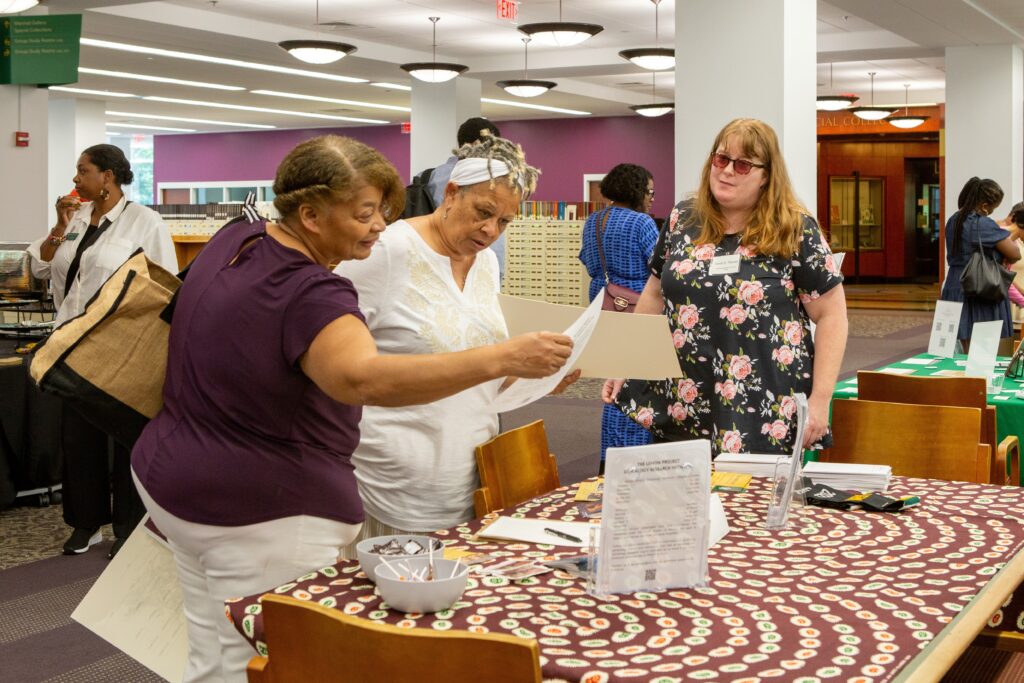
Family History Showcase. Photo by Sara Belmont, William & Mary Libraries.

The Lemon Project: A Journey of Reconciliation at William & Mary recently held its 5th Summer Sankofa Genealogical Research Workshop, hosted at Swem Library in collaboration with the Bray School Lab. Gathering both in person and on Zoom, participants from across Virginia and beyond came together to delve into their family histories and explore their ancestral roots. 

Originally launched during the COVID-19 pandemic, this workshop series is part of The Lemon Project’s Genealogical Research Initiative, created to connect descendants of those enslaved by William & Mary and to foster a vibrant genealogical community with ties to Williamsburg, James City County, and York County. Since its inception, the workshop has become a space for discovery, dialogue, and reflection—helping attendees research, document, and preserve their family and community histories. 

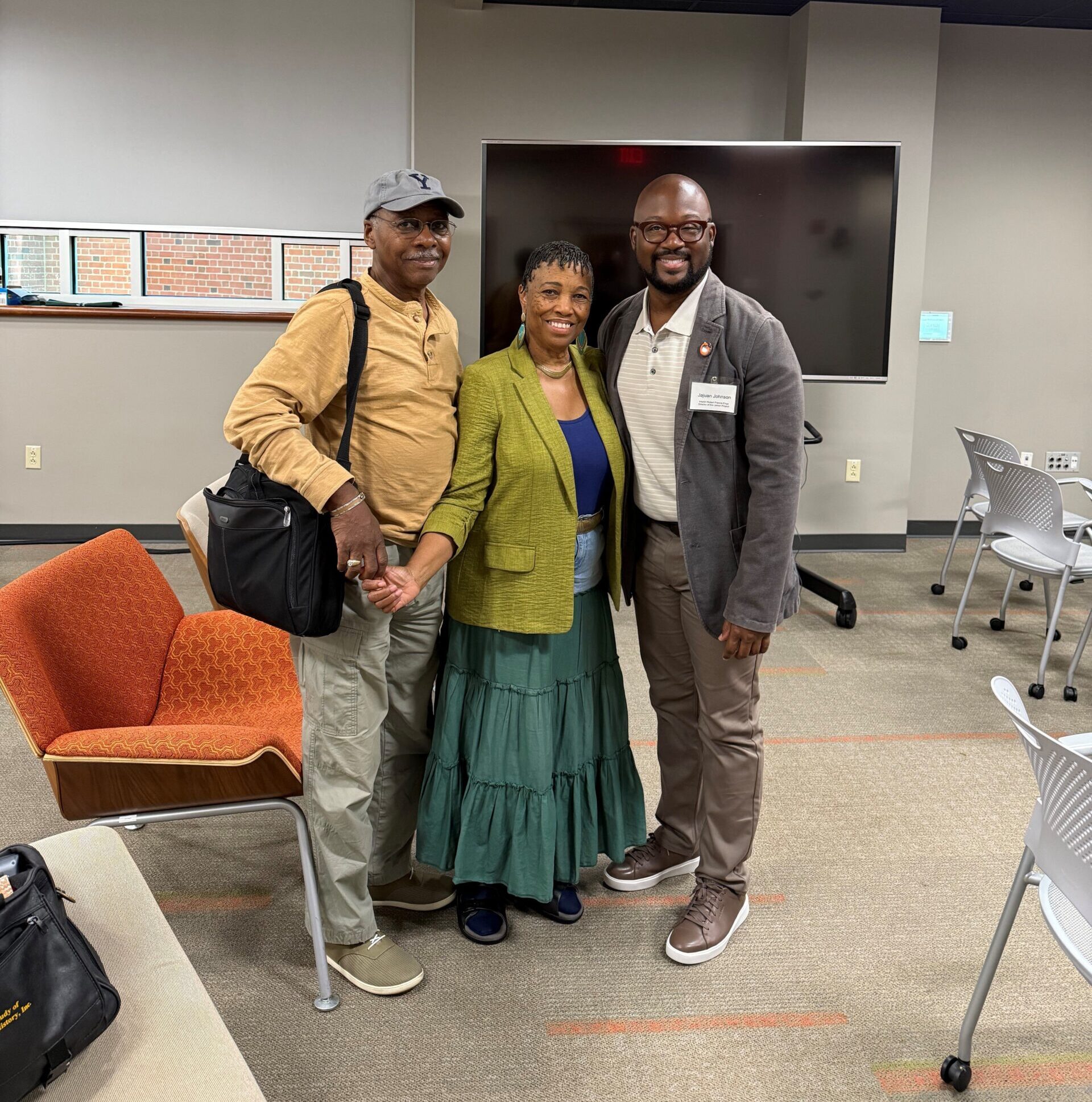
Barbara Dunn, Carl Dunn, and Lemon Project Interim Director Jajuan Johnson.

Among the attendees were Barbara and Carl Dunn, who traveled from Northern Virginia to learn more about an ancestor enslaved at Nottoway Quarter, a plantation located in what is now Southside Virginia near the Nottoway River. The couple shared a remarkable family history book that traces their lineage from Africa to the Americas—an example of the deep personal connections uncovered through genealogical research. 

Rooted in the Akan concept of Sankofa—which calls us to look back, reclaim our past, and move forward with wisdom—the workshop offered tools and inspiration for participants to explore digital archives, break through research barriers, and share their stories. 

The workshop featured several outstanding speakers and facilitators: 

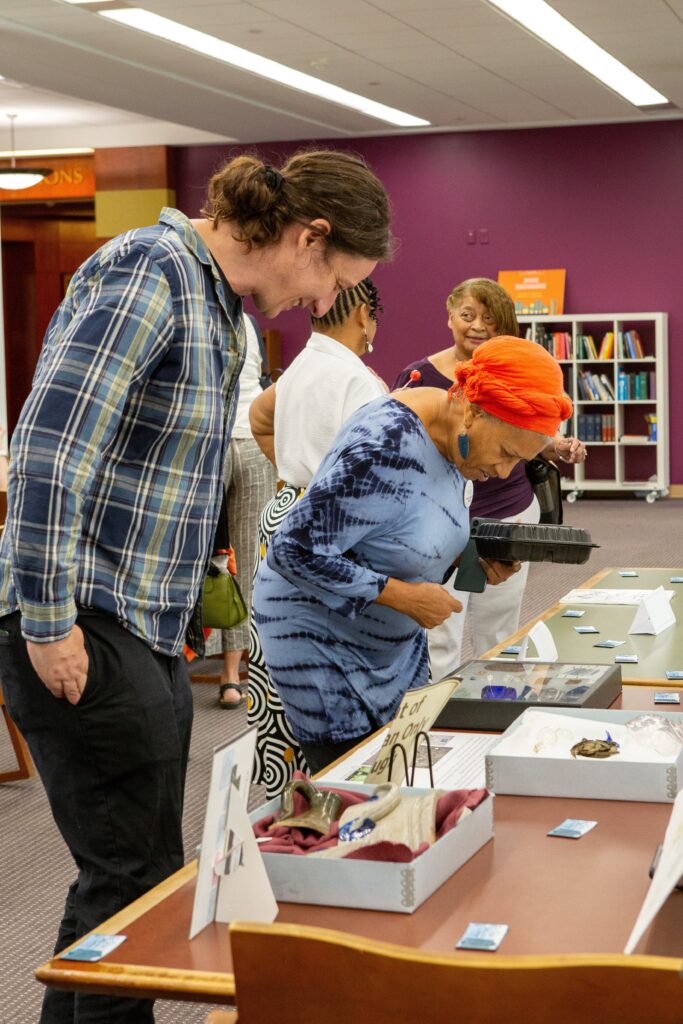
Mary Lassiter views artifacts from the Reservation. Photo by Sara Belmont, William & Mary Libraries.
  • Lydia Neuroth, Project Manager of Virginia Untold: The African American Narrative at the Library of Virginia, introduced attendees to a rich digital archive documenting the lives of enslaved and free Black and multiracial individuals. She also previewed upcoming expansions to the database. 
  • Elizabeth Drembus, genealogist at the Bray School Lab, presented on her efforts to trace the descendants of children enslaved and educated at the Williamsburg Bray School between 1760 and 1774. 
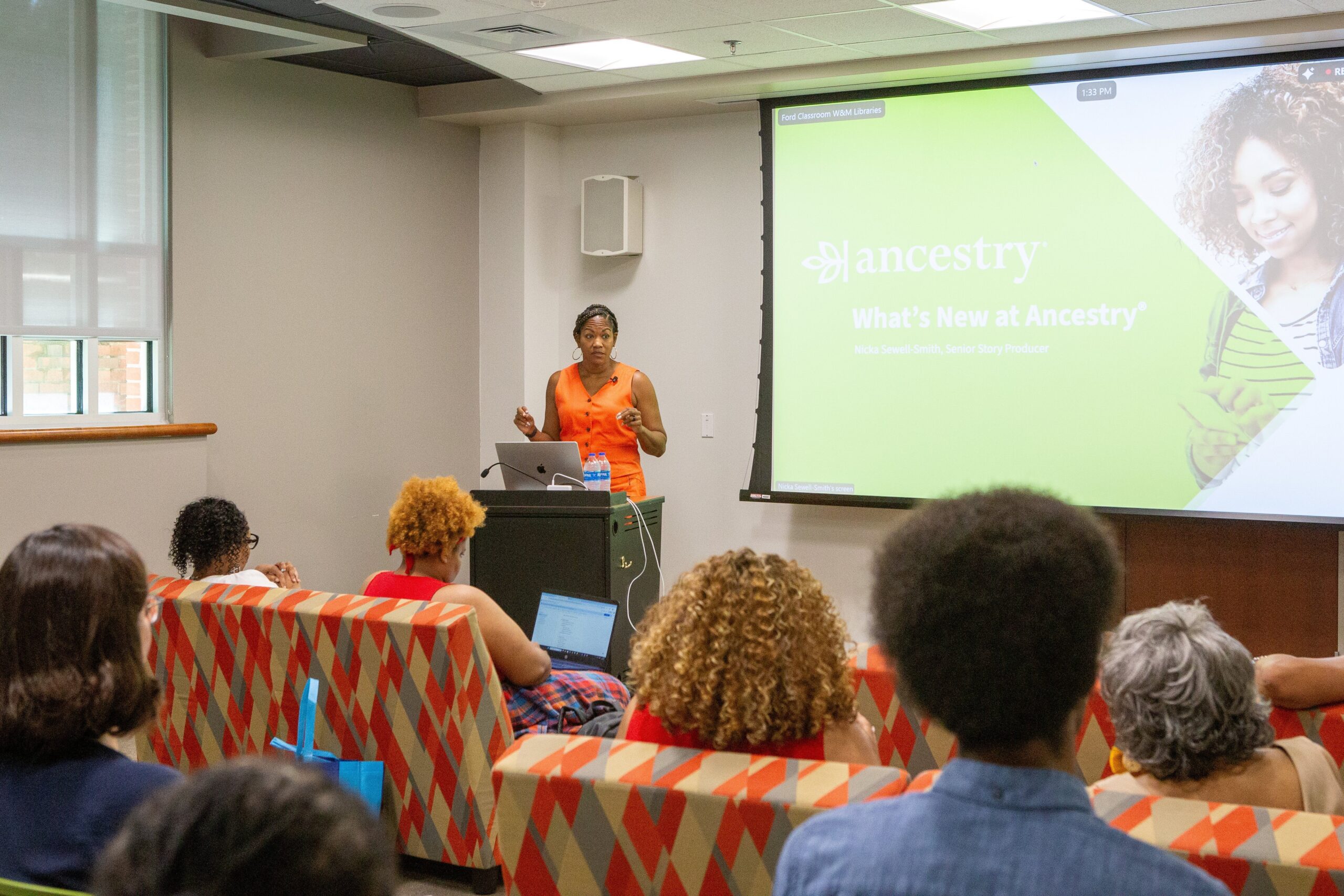
  • Nicka Sewell Smith, Senior Story Producer at Ancestry.com, delivered a powerful keynote on optimizing the world’s largest genealogical database. She also provided one-on-one assistance to participants navigating research challenges, offering encouragement and expertise. 

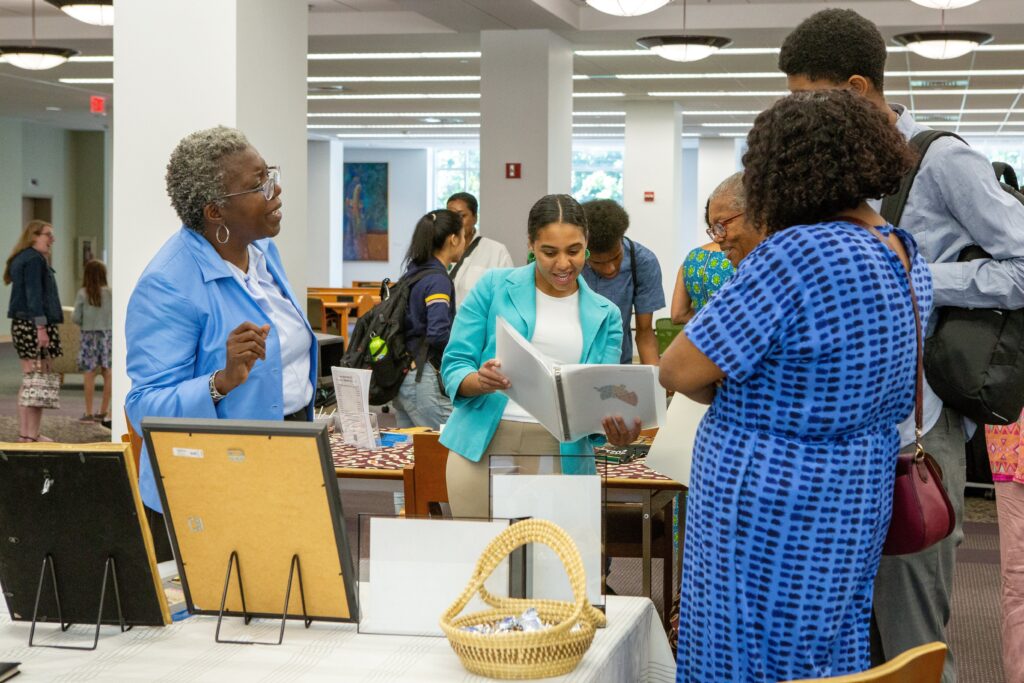
The workshop concluded with a reception and family history showcase, organized by Jessica Ramey, Instruction and Research Librarian at Swem Library. Attendees explored a special exhibit featuring materials from The Reservation, a historic Black community in York County displaced during World War II. Rare items from Swem’s Special Collections Research Center were also on display, connecting local histories to broader national narratives. 

Associate Director Sarah Thomas speaks with community members. Photo by Sara Belmont, William & Mary Libraries.

Finally, participants gathered for a tour of the Hearth Memorial to the Enslaved and offered reflections at the Sankofa Seed, a monumental bronze and stainless-steel sculpture by Steve Prince, Director of Engagement at the Muscarelle Museum of Art. The sculpture served as a powerful closing symbol—reminding us that in uncovering the hidden stories of our ancestors, we sow the seeds for a more just and informed future. 

The Lemon Project team looks forward to our fall 2025 genealogy roundtable events, where we will continue to build our research community.  

Comments closed

The Lemon Project Featured on Local Radio—and Wins Big!

By Dawn Morris, The Lemon Project Administrative and Fiscal Coordinator

Dawn Morris with Best Human-Interest Series – Radio (Small Market) award

We happily share that The Lemon Project was featured on the “Making a Difference Monday” radio show, hosted by Lisa Granger on FM 93.5 The Burg and WMBG AM 740. This weekly segment spotlights nonprofit organizations making a positive impact in the Williamsburg community.

During the February 2024 interview, Lemon Project team members Dr. Jajuan Johnson and Gabrielle Pressley spoke about our mission, ongoing work, and the importance of community engagement. The conversation touched on our research, outreach, and the lasting connections we aim to build in Williamsburg and beyond.

Following the interview, Traffic Manager and Client Services Coordinator Eve Rogers submitted the segment for award consideration at the 88th Annual Virginia Association of Broadcasters’ Summer Conference. We were happy to learn that the interview had been selected as a finalist—and I was excited to attend the award ceremony.

Lisa Granger’s interview with The Lemon Project won the award for Best Human-Interest Series – Radio (Small Market)! In fact, The Burg swept nearly every category in which they were nominated!

We are grateful to Lisa Granger and the entire team at The Burg for helping share our story—and we are proud to be part of a community that values the power of dialogue, reflection, and change.

Comments closed

Building Bridges through Public Humanities & Community Collaborations

By Jajuan Johnson, Ph.D., Public Historian for Research & Programs, The Lemon Project & University Libraries

The mission of the Lemon Project centers on bridging the gap between William & Mary and African American communities through research, programming, and support for students, faculty, and staff. To achieve this mission, Dr. Jajuan Johnson invited various partners and friends from both on-campus and off-campus to participate in a bi-semester convening known as a “public humanities gathering.” The meetings aims to strengthen our alliance as scholars and practitioners who collaborate with individuals and groups on public history projects, educational initiatives, and STEM-related endeavors through the multi-disciplinary approach of public humanities.

During the first meeting, we tackled the question: What is public humanities? Because our projects are situated in a higher education institution, other conceptions of our group’s definition of public humanities include a commitment to the ethics of our fields, adherence to the institutional value of belonging, and democratization in project development. We are committed to doing good public humanities.

The gathering is also a space for recognizing collaborative and co-creative work, often less noticed than traditional academic output. William & Mary is home to numerous public humanities initiatives done by programs, such as the Lemon Project: A Journey of Reconciliation, James Monroe’s Highland, the Bray School Lab, Muscarelle Museum of Art, and University Libraries, to name a few, so our bi-semester meetings is an opportunity to learn more about the goals, objectives, and public programs of each entity leading to a few collective goals of the public humanities gathering. The future plans include a public humanities awareness event, the development of a newsletter or information clearinghouse, and further uniting with colleagues at W&M and other institutions to strengthen public-engaged scholarship.

 Engaging Communities in Critical University History – NCPH Conference 2025

The 2025 National Council on Public History conference in Montreal, Quebec, Canada, drew historians globally on the theme Solidarity/Solidarité.  The proclamation is a charge for public historians “to consider our shared responsibilities and mutual obligations to realize solidarity within our organizations, with the communities we serve, and with the wider world we live in.”[1] In response to this call, a roundtable was assembled by colleagues with Hopkins Retrospective, a public history initiative exploring the history of Johns Hopkins University. The roundtable, Engaging Communities in Critical University Histories, included Kirt von Daacke from the University of Virginia/Universities Studying Slavery Consortium, Jajuan Johnson with William & Mary’s Lemon Project, and Allison Seyler and Ve’Amber Miller of Johns Hopkins/Hopkins Retrospective.

The session focused on how public history projects housed in universities can ethically engage with local communities, emphasizing difficult histories and centering historically underrepresented voices.  In the first half of the roundtable, presenters shared models for working in solidarity with local community stakeholders. In the second half, representatives from each institution led small group discussions, during which audience members shared issues they faced at their institutions and brainstormed various ways to enhance community collaborative practices and power-sharing in our public history work.  The National Council on Public History announced its 2026 theme: The Work of Revolution. The organization is partnering with the American Association for State and Local History for the Providence, Rhode Island conference.


[1] National Council on Public History, NCPH News: https://ncph.org/news/ncph-2025-cfp-now-open-through-july-15/

Comments closed

The Lemon Project’s Summer 2024 Impact

By Jajuan S. Johnson, Ph.D.

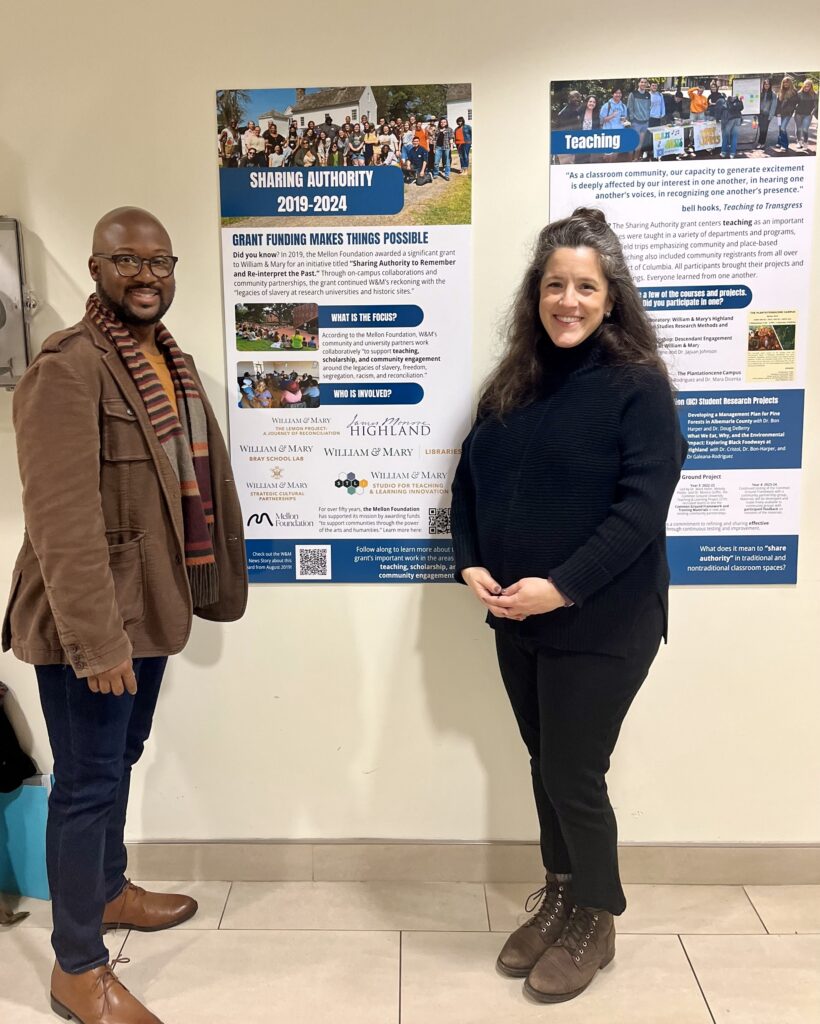
The Lemon Project team and their community of supporters in Williamsburg and beyond hosted two dynamic summer programs—the Summer Sankofa Genealogy Workshop Series and the Lemon’s Learners Black History Matters Summer Camp. Jajuan Johnson, the Lemon Project Mellon Foundation Postdoctoral Fellow, and Highland’s fellow, Mariaelena DiBenigno, also concluded their appointments with the exhibition “Sharing Authority 2020-2024.” The exhibit showcases their practice with William & Mary students, faculty, staff, and descendant communities and offers a model of doing public history with multiple collaborators. These projects build on the Lemon Project’s mission to “build bridges between William & Mary and African American communities through research, programming, and supporting students, faculty, and staff.”

Lemon’s Learners Black History Matters Camp

Nearly twenty middle school students participated in the 2024 Lemon’s Learners Black History Matters Summer Camp. The team collaborated with the Robert Frederick Smith Explore Your Family History Center at the National Museum of African American History & Culture (NMAAHC). Ori Yarborough and Sterling Warren, Applied Public History Fellows at the NMAAHC, guided students in learning oral history best practices.

In addition to an immersion in local Black history at the W&M Libraries Special Collections Research Center, the learners conducted video interviews with Williamsburg community members Mary Lassiter, Colette Roots, and Johnette Gordon Weaver about their experiences of growing up in Williamsburg. The camp concluded at Hearth: Memorial to the Enslaved with a celebration amongst family and friends for their two-day accomplishments. Jody Allen and Jajuan Johnson donned the program graduates with Kente stoles and commissioned them to seek historical facts on Black history and to share the knowledge.

Summer Sankofa Genealogy Workshop Series

The fourth Summer Sankofa Genealogy Workshop Series drew family historians from across the United States for the virtual meetings. Internationally recognized genealogist Nicka Sewell Smith kicked off the series with the presentation, “We Weren’t Taught How to Smile,” a story of a Black family from the Mississippi Delta who emerged from enslavement by the family of President Andrew Jackson and moved to the front lines of the civil rights movement of the 1960s.       

Tasked with finding descendants of sixteen enslaved persons sold by the Trustees of Wake Forest Institute (now University), genealogist Renate Yarborough Sanders presented updates and breakthroughs on genealogical research tied to Wake Forest University’s Slavery, Race, and Memory Project. In “Finding Joseph’s Family: A Model Case of Using Reverse Genealogy to Piece Together a Family Puzzle,” Renate shared the steps that she took and the resources that she used to uncover the afterlife of one family line, bringing its legacy forward from slavery into the mid-twentieth century, one record at a time.

Transforming Oral History into Documentation: The Early County Massacre,” with genealogist Orice Jenkins, is about history, memory, racial violence, and the process of finding the facts about a 1915 mass lynching in Early County, Georgia. Jenkins presented compelling research and guided attendees on the often tedious process of corroborating oral histories and interrogating historical documents, such as newspapers, court documents, and census reports.

The series was successful because participants were dedicated to honing family history research skills. You can view past genealogical workshops on the Lemon Project YouTube channel.

Sharing Authority at 5 Years: 2019-2024 Exhibition at the Sadler Center  

As the Mellon Foundation-funded Sharing Authority to Remember and Re-Interpret the Past ended in July, postdoctoral fellows Mariaelena DiBenigno and Jajuan Johnson shared the grant’s ongoing work with the W&M community. Using the topics of teaching, scholarship, and community engagement, they designed and installed a temporary panel exhibit for the central part of the campus. In February 2024, the six-panel exhibit “Sharing Authority at 5 Years: 2019-2024” opened in W&M’s Sadler Center. It included community and university voices and took a future-forward approach. Though the grant cycle came to a close, the university and its partners continue to address the “legacies of slavery at research universities and historic sites.” As one of the partners, the Lemon Project appreciates the support of on- and off-campus supporters who ensured the success of the Mellon-funded initiative.

Comments closed

Researching Rev. L.W. Wales, Jr.

by Olivia Blackshire, an Independent Study student with Dr. Jody Allen

When I started an independent study with Dr. Allen, I was not quite sure what to expect. I was familiar with research papers and searching databases; however, being on assignment for the serious inquiries of a family was a big deal. For the next 15 weeks, I spent time ̶ at the request of Ms. Wilhelmina White ̶ researching the life and times of the Wales family, specifically L.W. Wales, Jr. Both Rev. Wales, Sr., and Rev. Wales, Jr., were activists and leaders in this community, and surrounding their lives was an eagerness to know how they impacted the world around them. Filled with excitement and a responsibility to piece together the family’s story in Williamsburg, I began my research.

I found the story of Rev. Wales, Jr., by first reading about the man who set the foundation for his life, his father. L.W. Wales, Sr. (1860 – 1927) was not only a pastor at Mt. Ararat Baptist Church for 42 years, but was also a pillar of the community. As principal of Williamsburg Public School Number Two and a teacher in various counties, he was active in the educational realm and perhaps planted the seed for Bruton Heights School, an all-Black high school, since he talked about that and about plans for funding in his Brief Autobiographical Sketch.[1] He also published a leaflet called The Peninsula Churchman, which detailed his church work and school-building efforts. He rubbed elbows with lots of people, including Benjamin S. Ewell, a former Confederate general and former president of William & Mary.[2] Furthermore, L.W. Wales, Sr. was financially well off; tax records showed that he was one of the highest earners in his area[3], and he “succeeded in buying a considerable amount of real estate, holding and owning some in almost every section of the city of Williamsburg and some in Newport News.”[4]

Considering such a track record, L. W. Wales, Jr., (1895-19654) had big shoes to fill. Although his legacy was not like his father’s, he made an impact. Picking up the mantle as pastor after his father’s death in 1927, Rev. Wales, Jr. worked for Mt. Ararat for 36 years, doing much for the relocation and beautification of the church during his tenure.[5] According to the 1982 Mt. Ararat Baptist Church Centennial Anniversary Souvenir, Rev. Wales Jr., worked within schools alongside his wife, Evelyn Wales. A report by historian Linda H. Rowe describes him as an advocate for the construction of James City Training School, a predecessor of Bruton Heights School.[6] He too even made his mark in real estate, having enough property to create the Wales subdivision housing for low- and moderate-income families in the 1940s.[7]

There were a lot of memorable moments from this search. Anytime I’d find new information, especially an image, I always felt like I was discovering more pieces to the puzzle. I’m also grateful for the people I met along the way, like Sidney (a graduate student working with the Lemon Project), Earl T. Granger III (Colonial Williamsburg’s Chief Developmental Officer), and Clifford B. Fleet III (Colonial Williamsburg President and CEO) during a trip to the John D. Rockefeller Jr. Library.

Two significant thoughts come to mind as I reflect on my studies with Dr. Allen. For one, history is a form of detective work. Sometimes the whole thing feels like you’re trying to crack a cold case. You’re digging through information that’s been mistreated (physically in the archive or historically through erasure), and the clues you need are not always readily available. Interpreting or making connections with limited time or facts is a tall order. Yet those who take on the challenge may be the only ones preventing someone’s story from fading into obscurity.

I also found that if one works in this field, one must be flexible to change; sometimes the search doesn’t end the way you expect, and that’s okay. Although I didn’t find or get through as much as I wanted, I still managed to learn about the church’s history and the Wales’ place in it and the surrounding communities. You may not find what you’re looking for, but the process you take to get there, and the things you find along the way, are just as rewarding. Those quotes about the journey being better than the destination may have some merit after all.


[1] Herbert and Doris Crump Rainey Papers, 1945-2013, Special Collections Research Center, Swem Library, William and Mary.

[2] Brief Autobiographical Sketch of the Life and Labors of Rev. L. W. Wales, D.D (1910) from Herbert and Doris Crump Rainey Papers, 1945-2013, Special Collections Research Center, Swem Library, William and Mary.

[3] James City County and Williamsburg City Personal Property Books, Special Collections Research Center, Swem Library, College of William and Mary.

[4] Brief Autobiographical Sketch of the Life and Labors of Rev. L. W. Wales, D.D (1910) from Herbert and Doris Crump Rainey Papers, 1945-2013, Special Collections Research Center, Swem Library, William and Mary.

[5] Herbert and Doris Crump Rainey Papers, 1945-2013, Special Collections Research Center, Swem Library, William and Mary.

[6] “A History of Black Education and Bruton Heights School, Williamsburg, Virginia” by Linda Rowe (1997). https://research.colonialwilliamsburg.org/DigitalLibrary/view/index.cfm?doc=ResearchReports%5CRR0373.xml&highlight=negro

[7] Williamsburg Reunion Booklet (2012) from Herbert and Doris Crump Rainey Papers, 1945-2013, Special Collections Research Center, Swem Library, William and Mary.

Comments closed

My Semester with Dr. Allen: The Intrinsic Benefits of In-Depth Historical Research

by Nicholas Prather, Lemon Project Spring 2023 intern

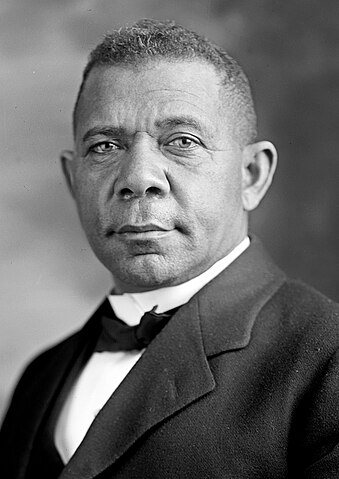
Booker T. Washington. Library of Congress Prints and Photographs Division Washington, D.C. 20540 USA https://www.loc.gov/pictures/item/2016857180/
Front Page Clipping of The Flat Hat, November 17, 1914 (Vol. IV, No. 7)

Over this past semester, I spent two to three hours each week working as a research intern with Lemon Project Director Dr. Jody Allen. During my experience, I learned about the inevitable bumps in the road that come with careful historical research. However, over the four months we spent together, I feel I also came to appreciate those roadblocks and understand their purpose when it comes to discovering something meaningful ̶ something that can change the scope of what we know. When we started working together in the first few weeks of the semester, we initially focused our research on the exploits of nineteenth-century Wiliam & Mary Chemistry Professor Dr. John Millington, specifically his alleged experimentation on Black children in the Williamsburg area through some sort of shock therapy. But, as we sifted through dozens of pages of old correspondence in the Special Collections Reading Room, not to mention pages of nearly incomprehensible cursive that needed deciphering, we learned that it may not be as feasible as we thought to come to any conclusions about Millington, given how much careful close reading it would require. But failure to get immediate results in research, albeit a regularity, is never really a failure – it’s an inherent and important part of the process. After spending a few non-fruitful weeks on Millington, we decided to start looking at the history of illustrious Black educator and speaker Booker T. Washington’s history and relationship with William & Mary. Using Special Collections’ digital archives, I uncovered two separate Flat Hat articles (it’s amazing when your school newspaper is so historic to where it can be a reliable primary source!) that described two separate visits Washington made to the College in 1913 and 1914, just before his death in 1915. Under the presidency of Lyon Gardiner Tyler, both students and faculty were let off from classes to witness Washington’s awesome speeches in the Williamsburg Chapel and Courthouse. After weeks spent devoid of results, it was quite fulfilling to learn that a figure so pivotal to race relations in Gilded Age America had a relationship with the William & Mary administration.

In the end, even though there is still far more that can be wrung out of the research into both Millington and Washington, my semester with Dr. Allen was still a uniquely enriching experience. The growth mindset necessary for productive research can be stunted when we expect to see immediate results. Careful and critical historical research requires patience, precision, and pathos, none of which can be expected mere days or weeks into the process. And when we start thinking of research as steps in an inherently beneficial process that tempers our character and critical thinking alike, regardless of “success” or “failure” (whatever that means), that is when we truly start to see the fruits of our labor manifest themselves in personal and intellectual growth.

Comments closed

New Lemon Project Research Findings on Slavery at William & Mary

By Dr. Jajuan Johnson, Mellon Postdoctoral Research Associate, The Lemon Project

Over the past two years, the Lemon Project Genealogy Initiative has built alliances with researchers in Williamsburg, the greater Tidewater area, and globally. Through training, our student interns help mine digital platforms and special collections to find extant sources providing more data about the lives of people once enslaved by the university. In fall 2022, Margaret Perry, a W&M alumnus and researcher at Colonial Williamsburg’s’ Apothecary Shop, met with Dr. Jody Allen, Lemon Project intern Alex Montano, and me to share medical account records that list names of people enslaved by William & Mary in the Galt Papers (Galt-Barraud Partnership, 1782-1799; John M. Galt I & Alexander D. Galt Operating as Galt & Son,1800-1808; and Alexander Galt, 1809 – 1841) located in the Special Collections Research Center at Swem Library.   

The Galt Family Medical Practice

The Galt family medical practice lasted in the Williamsburg and Yorktown area from the late eighteenth century through the nineteenth centuries. Dr. John Minson Galt, I was educated at William & Mary and received medical in Edinburgh and Paris. In addition to his extensive independent medical practice, whereby he treated people enslaved by William & Mary and others, Galt I was also an attending physician of the Public Hospital of Williamsburg (currently Eastern State Hospital), the first psychiatric hospital in the United States. His son, Dr. Alexander D. Galt, and grandson of Dr. John M. Galt, carried on his practice; both served as superintendents of the hospital.[i]

The Findings

The Galt-Barraud Papers are the professional and personal papers of the Galt family of Williamsburg in the late eighteenth and early nineteenth centuries. The preliminary findings in the medical ledgers, notably the W&M account, revealed the following:

  • The names of 28 people enslaved by W&M
  • Lemon, who the Lemon Project is named after, is listed in the records 19 times from 1785 to 1814, indicating that he experienced health complications over a long period leading to his death.
  • Six people not previously on our list appear in the Galt Papers and have been added to Hearth: Memorial to the Enslaved, as of March 2023
NameDates & Records
Miame1786, 1787, 1788, 1790,1791, 1793,1794, Galt-Barraud Partnership Papers
Miame’s Child1788, 1789,1790,1795, Galt-Barraud Partnership Papers
Jamie1787, Galt Barraud Partnership Papers
1812, Alexander D. Galt Medical Records
Jim1785, Galt-Barraud Partnership Papers
Jimmy1783, Galt-Barraud Partnership Papers
Franky’s Child1787, 1796, 1799, Galt-Barraud Partnership Papers

Our team, which includes Lemon Project intern Lena Bullard, a first-year William & Mary student, is further searching the records to gain clues about enslavers and the people held in bondage. These significant records provide additional information on the physical condition of people enslaved by the university, and there are lists of individuals and families of other enslavers.

MsV 5 – Galt-Barraud Ledger A, 1782-1797, fols. 116, 204. Galt Papers (I), series 3, box 3. Swem SCRC.

[i] Galt Family of Williamsburg Source: The William & Mary Quarterly, Vol. 8, No. 4 (April 1900), pp. 259-262 (also see: W&M Knowledge Base, John Minson Galt, https://scrc-kb.libraries.wm.edu/john-minson-galt-1744-1808; see Dr. Barraud Historical Report https://research.colonialwilliamsburg.org/DigitalLibrary/view/index.cfm?doc=ResearchReports%5CRR1193.xml&highlight=

Comments closed

The Lemon Project and Clemson University Exchange 

By Jajaun Johnson, Ph.D., Mellon Postdoctoral Research Associate

The Lemon Project is a model for other universities studying slavery and its legacies. The team recently participated in an opportunity to exchange lessons with Clemson University’s Woodland Cemetery and African American Burial Ground Historic Preservation Project and the Call My Name Project, both led by Professor Rhondda Robinson Thomas.  

The opening reception in the Department of History’s library.  

The three-day visit convened students, faculty, staff, and community partners who traded ideas and best practices on archaeology, participatory research, and community collaboration. “The opportunity to exchange ideas with our Clemson University colleagues was a gift. We highlighted the work of our outstanding students and on and off-campus partners,” Jody Allen, the Francis Engs Director of the Lemon Project, said.  

The meeting started with a dinner and a dynamic conversation with the Friends of the Reservation, Coming to the Table Historic Triangle, Divine Concept Group, Inc., the Bray School Lab, All Together, and the Village Initiative. Each representative discussed their organization’s or project’s mission and goals and outlined how they are spurring change in the public history landscape and through civic engagement. The group was officially welcomed to William & Mary by Dr. Chon Glover, the Chief Diversity Officer who recognized the work of the Lemon Project. She further discussed the university’s commitment to diversity and inclusion.  

Dr. Sarah Thomas leads Historic Campus tour

The Lemon Project interns and students who participated in the incubator grant program gave examples of their research and experiential learning opportunities. The graduate assistants led a session with the Clemson University graduate students on their archival and anthropological contributions to the study of slavery at W&M.  

W&M Special Collections granted our guests access to rare documents project researchers use to find the names and details about the people once enslaved by the university. Andre Taylor, William & Mary’s oral historian, demonstrated the uses of oral history to document African American foodways. Steve Prince, Artist and Director of Engagement at Muscarelle Art Museum, guided the group in a communal quilt-making exercise where they exchanged stories as a team-building exercise. Our visitors also had a chance to meet President Rowe and hear her thoughts about the importance of the universities studying slavery movement. 

Reverend Leslie Revilock presented the Lemon Project with the Building Connections and Bridging Differences Award.

In addition to the W&M’s Historic Campus tour, the Clemson group visited the First Baptist Archaeological Site, Bruton Heights School, and the Historic Oak Grove Baptist Church. Both university projects amplify the voices of the descendant communities, and visits to these sites provide an authentic connection to people interpreting their spaces and environments.   

After reflecting on the experience, Dr. Rhondda Thomas offered gratitude: “Thank you for organizing such a rich, informative, and enlightening visit for Clemson’s cemetery team. I’m still thinking about many things we heard from you and your community partners and viewed on and off campus. I’m so glad we were able to come.”  

The Lemon Project and Clemson University exchange is part of our ongoing efforts to share best practices and facilitate collaboration locally, regionally, and internationally on the study of slavery and its legacies. 

1 Comment